Virginia Kuhn (2023) “Who Owns Language? ChatGPT: Biases, Blind Spots and Silicon Valley,” Chat GPT and the Specters of Authorship. Media Res.
More on this below:, titled Chatbot Hallucinations, though of course, hallucinations are a feature not a bug for generative AI.

Playing with Generative AI: Remix + AI
Early on, it felt easier to justify working with OpenAI tools, before I knew of their unsavory practices and the outrageous methods for training their models. The amount of compute devoted to hoovering up dirty data that someone else will have to clean via exploitative labor, as well as the brazenly intentional ways they raided creative work under the guise of fair use, is truly despicable. With every other tech campany following suit (to ‘keep up’) we are at a sad place indeed. This is the subject of my current work.
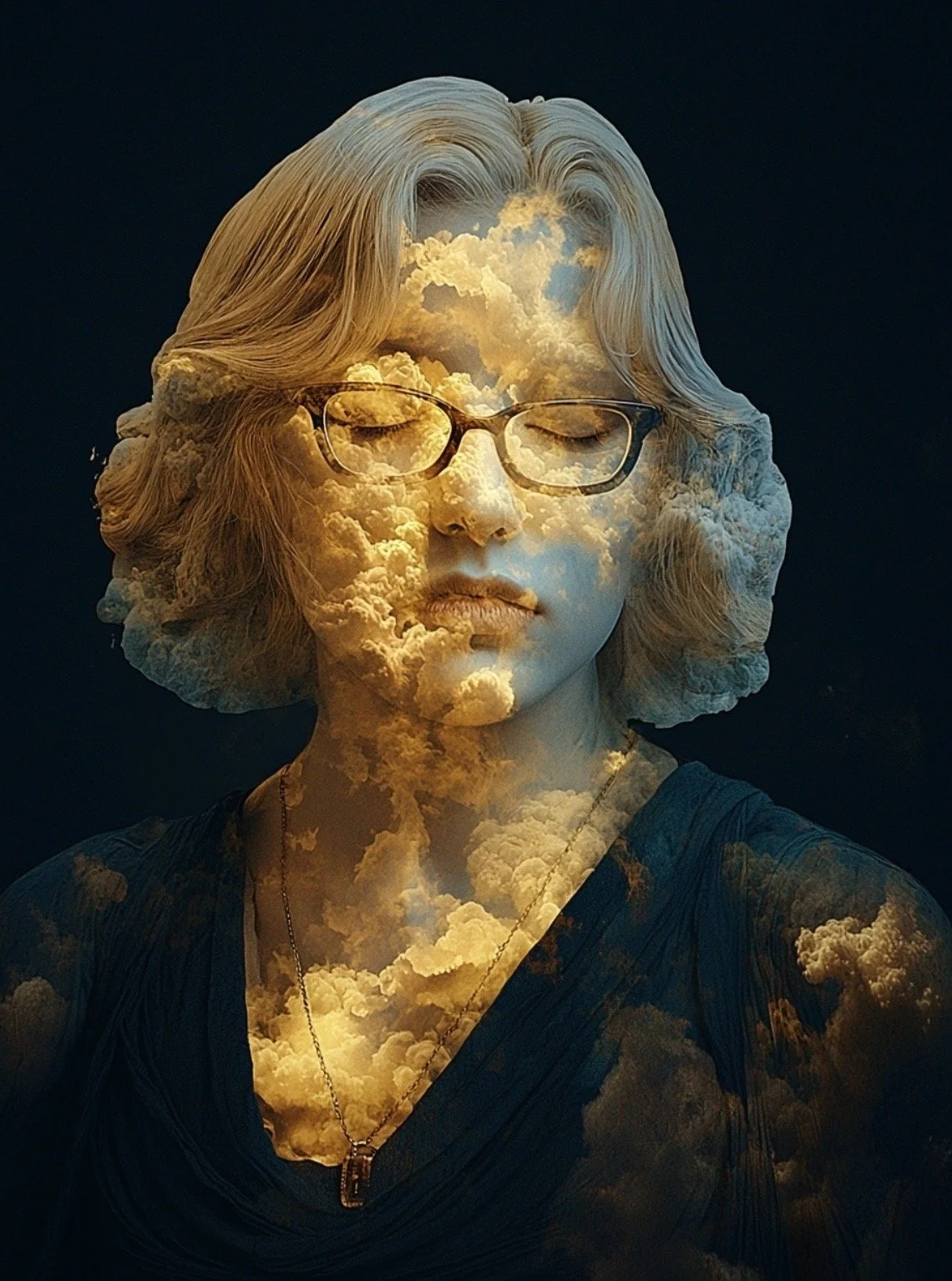
But the images on this page represent early experiments using Midjourney in an effort to reproduce parts of one of my remix videos. Done in 2023 for a project with my colleague, Vicki Callahan, which was funded by the USC Center for Generative AI’s AI in Media and Storytelling. We explored the potential for remix video as well as project documentation using GenAI.

The Mona Lisa Remixed
Part of my efforts focus on project documentaion. My students (myself) often fail to create good documentation in the process of creating an exciting project. I thought perhaps using a well known ‘project’ would help and indeed, GPT plus generated a great set of instructions for documented it. Less effective was my attempt to remix the Mona Lisa with a safely pin in her nose in the style of the Sex Pistoil’s image of the Queen.
Another (failed but fun) Remix
This 4 second video was an attempt to recreate a portion of one of my remix videos, as above, but this time, with some movement. I was looking at a sequence I used that is supposed to represent the evolution of humans, via figures emerging from the swamp (at about 02:09). Once I got a few figures emerging, via RunwayML, I began shifting the look at feel of the figures, finally using cats (given their online ubiquity and because they are just fun!).
Chatbot Hallucinations
In Mf a week’s worth of brief posts with video components that are centered on a particular theme. In May of 2023 I participated in one titled ChatGPT and the Spectres of Authorship. Typically, these posts come out each day, Monday through Friday. However, for that particular week, the editors had us post simultaneously and then asked ChatGPT to provide a counterargument to each of our posts, written in our voices.
That said, the disturbing part came when I read the ChatGPT-generated posts. The first three posts—mine was the Wednesday post—sounded well-reasoned enough, although they were not really disputing the original, and they often provided an indictment of ChatGPT and other Gen AI platforms. Then I got to the fourth post, which was a rewrite of the one by Eduard Navas, a fellow remix scholar/practitioner and I read this line:
As Virginia Kuhn notes, the development of AI is a gradual process that can be guided by ethical considerations to ensure that it aligns with our values and benefits humanity (Kuhn, 2018). Then, the works cited the lists: Kuhn, Virginia. "Framing and the discourses of digital media." Digital rhetoric and global literacies: Communication modes and digital practices in the networked world (2018): 9-24.
This does sound like something I would say, and it sounds like a publication I would write for, but the problem is I never said it. I never wrote it. The book does exist, but it was published five years earlier in 2013. This is the real issue: these chatbots get things sort of right. But the parts they get wrong are glaring if seldom obvious, causing all aspects to require verification.
The main way of transmitting knowledge in the contemporary world is through writing, and citation is a way to check that knowledge and to learn more about a topic. It is also a form of dialogue among experts on a given topic: This person argues X, but I argue Y, and here’s why. Given this role, precision is key.
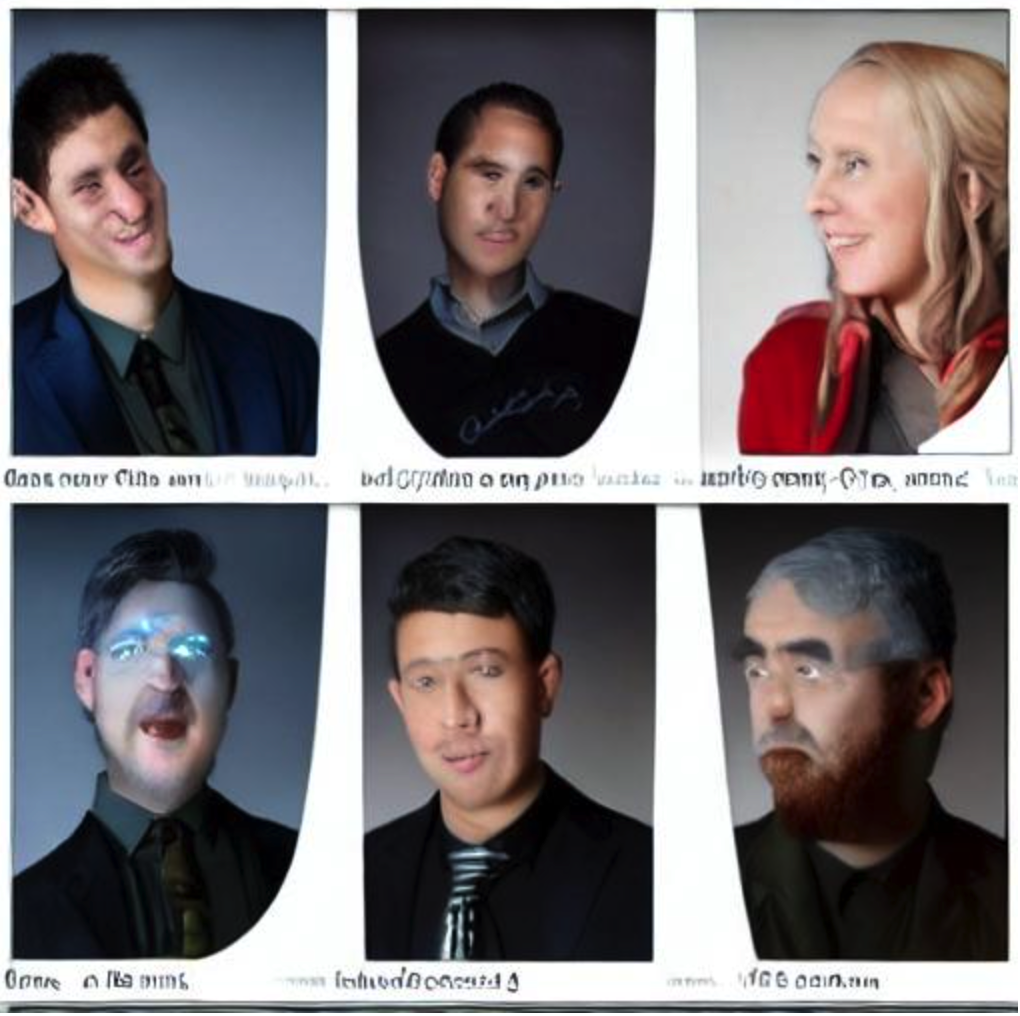
The editors also asked the chatbot to create an image of us: evidently, I am a blond woman with a huge forehead (!) but this image helped me realize that I was the only woman, something I could have easily figured out on my own, but which I am likely conditioned to since it is common in many of the tech circles I have myself in since being the only girl my high school programming class in the late 1970s. Again, this image gets things sort of right.